



Beyond Zillow: Building a Trustworthy Digital Footprint for Your PEI Realty Brand
Blog Post Title: Beyond Zillow: Building a Trustworthy Digital Footprint for Your PEI Realty Brand

For most prospective home buyers and sellers, the real estate journey begins with a familiar ritual: logging onto a major portal like Zillow or Realtor.ca. These platforms offer undeniable convenience, presenting a vast catalogue of properties at the click of a button. However, while they serve as a useful starting point, their convenience comes at the cost of local accuracy and nuance—a cost that is particularly high in the unique Prince Edward Island market.
This reliance on national aggregators creates a significant pain point. The algorithms that generate a “Zestimate” simply cannot comprehend the historic charm of a Charlottetown heritage home, and automated data fails to capture the subtle, yet critical, nuances of a waterfront property in Summerside or the community feel of a new development in Stratford. This disconnect between automated valuation and on-the-ground reality leads to confusion, misaligned expectations, and a general lack of confidence for both buyers and sellers. As a team of dedicated, local PEI experts, pei-realty.com understands that providing high value and expertise is paramount. This post aims to educate PEI buyers and sellers on what to look for in a truly trustworthy digital real estate presence, helping you move beyond the big aggregators to find the genuine local expertise your property journey deserves.
Key Takeaways
- National real estate portals like Zillow often lack the local nuance, accuracy, and up-to-date information crucial for navigating the unique PEI market.
- A trustworthy realtor’s digital footprint is built on the foundation of their professional website, which acts as the central hub for reliable information and direct-from-MLS listings.
- High-value, educational content—such as detailed neighbourhood guides, local market reports, and buyer resources—is a key indicator of an agent’s deep expertise and commitment to their clients.
- Authentic social proof, including detailed client testimonials and transparent reviews on multiple platforms, is essential for verifying an agent’s credibility and track record.
- pei-realty.com focuses on building this complete, trustworthy digital ecosystem to provide clients with the confidence and clarity needed to successfully navigate the PEI property market.
TL;DR
National real estate websites offer a broad starting point, but for a market as distinct as Prince Edward Island, they are insufficient. A truly trustworthy PEI realty brand proves its value through a professional website with accurate listings, provides deep local insights via educational content, and showcases a history of success with transparent client reviews. This comprehensive digital footprint, centered on local expertise, is what provides buyers and sellers with the confidence they need.
Relying solely on large portals like Zillow can give PEI home buyers and sellers an incomplete and often inaccurate picture of the market.
The allure of national real estate portals is their sheer scale, but this very scale is their greatest weakness when applied to a specialized market like Prince Edward Island. These platforms are designed to serve a continental audience, using broad-stroke algorithms that miss the fine details that define property value and desirability on the Island.
The Problem with “Zestimates” and Automated Valuations
Automated Valuation Models (AVMs), like Zillow’s “Zestimate,” are data-driven algorithms that calculate a property’s estimated market value. While useful for a ballpark figure in homogenous suburban areas, they are notoriously unreliable in markets with unique characteristics. An algorithm cannot account for critical PEI factors such as the impact of the Coastal Property Disclosure Statement, local zoning bylaws that affect rental potential, the specific appeal of being in a coveted school district, or the quality of recent renovations that use locally sourced materials. This often leads to sellers being anchored to an inflated price or buyers making offers based on misleadingly low estimates.
Outdated and Inaccurate Listing Information
A common frustration for eager buyers is the “syndication lag.” Properties you see listed as “active” on a major portal may have already accepted an offer or even been sold days ago. These sites pull data from multiple sources, and the delay in updating information can lead to wasted time and disappointment. This contrasts sharply with the real-time accuracy of a direct Multiple Listing Service (MLS) feed, which is what a professional realtor’s personal website should provide.
A Sea of Faces, A Lack of Local Context
Perhaps the most significant drawback is that these platforms function as massive, impersonal directories. Every agent’s profile looks similar, making it nearly impossible to differentiate a true, full-time PEI expert from an agent who only does occasional business on the Island. They don’t showcase an agent’s connection to the community, their understanding of Charlottetown’s diverse neighbourhoods, or their experience navigating the specific challenges of rural or coastal properties. You see a face and a phone number, but you don’t see their expertise.
A trustworthy PEI realty brand builds its digital footprint on a foundation of local expertise and direct communication.
The solution to the shortcomings of large aggregators is to shift your focus from finding a listing to finding a trusted advisor. A top-tier real estate professional in the PEI real estate industry understands that their value lies in their deep local knowledge, and their digital presence should be a direct reflection of that expertise. This is where you can begin to vet potential partners before you even pick up the phone.
A truly professional digital footprint is comprised of several key components working in concert:

- A professional, user-friendly website serving as a central hub.
- Valuable, educational content that demonstrates deep market knowledge.
- Verifiable social proof through authentic client reviews and testimonials.
- Active and genuine community engagement.
For a brand like pei-realty.com, this approach is fundamental. In the Prince Edward Island real estate industry, where community ties and local insight are paramount, a realtor’s digital presence must do more than just display listings. It must communicate their connection to the Island and their commitment to serving its residents and future residents with integrity.
An agent’s professional website serves as the central, most reliable source for their PEI property listings and market insights.
While social media and third-party portals are parts of the puzzle, a realtor’s own website is the cornerstone of their digital brand. It is the one space they fully own and control, making it the single most reliable source of truth for their business. This is their digital home base, where information is curated, accurate, and designed to serve you, the client.
Must-Haves for a Trustworthy Realty Website:
- Direct & Accurate MLS Listings: The most critical feature is a direct, fast, and searchable property feed from the MLS. This ensures you are seeing the most up-to-date information on available properties, without the lag of third-party sites.
- In-Depth PEI Neighbourhood Guides: A great agent knows the community, not just the house. Look for detailed guides on PEI communities like Charlottetown, Stratford, Cornwall, and Summerside. These should cover schools, amenities, local businesses, and the overall “vibe” of the area, demonstrating knowledge that goes far beyond the property lines. You can often find these resources organized on a website’s main pages, which are typically outlined in a
page-sitemap.xmlfor search engines. - Resources for Buyers & Sellers: A commitment to client education is a strong sign of a trustworthy professional. Look for free guides, checklists, blog articles, and market analyses that empower you with knowledge. This shows the agent is invested in your success, not just the transaction.
- Clear Contact Information & About Us Page: A professional website humanizes the brand. It should be easy to find out who the agents are, what their values are, and how to get in touch with a real person. A detailed “About Us” page builds trust and establishes a personal connection from the start.
Valuable, locally-focused content demonstrates a realtor’s expertise and commitment far more than a simple property listing.
Any agent can post a property for sale; an expert provides context, insight, and guidance. The best realtors on PEI act as educators and community advocates, and their digital content is the primary way they prove their expertise and willingness to help. This content strategy is a powerful differentiator.
Examples of High-Value PEI Content:
- Blog Posts & Market Reports: Look for content that analyzes PEI-specific trends, not just national averages. Topics like, “Understanding the PEI First-Time Home Buyers Program” or “What the Rise in Tourism Means for PEI’s Vacation Rental Market” show an agent is deeply engaged with the local economic and social landscape. A well-organized blog, often detailed in a
post-sitemap.xml, is a treasure trove of such information. You may also find content organized by topic, as seen in acategory-sitemap.xml, making it easy to find relevant articles. - Video Content: Video is a powerful medium for conveying authenticity and expertise. Personal property tours that highlight unique features, community spotlight videos that introduce you to different towns, or Q&A sessions answering common PEI real estate questions all demonstrate a high level of engagement and transparency.
- Meaningful Social Media Engagement: A trustworthy agent’s social media feed is more than an endless scroll of listings. They share community events, support local businesses, offer timely tips for homeowners, and engage in conversations with their followers. This shows they are an active and invested member of the community they serve.
Authentic client testimonials and online reviews provide transparent, real-world proof of a realtor’s performance and integrity.
In a relationship-based business like real estate, what past clients say is the ultimate measure of an agent’s performance. Social proof is non-negotiable when evaluating a realtor, and it’s crucial to look for unfiltered, genuine, and detailed feedback.
Where to Look for Trustworthy Reviews:
- Google Business Profile: This is often the first place to look for unbiased reviews. Because Google profiles are tied to individual accounts, the feedback is generally more authentic and provides a good cross-section of client experiences.
- Website Testimonial Page: While curated by the agent, a strong testimonial page will feature more than just one-line quotes. Look for detailed stories that describe the client’s situation, the challenges they faced, and how the agent helped them navigate the process. Video testimonials are a particularly powerful and transparent format.
- Third-Party Review Sites & Social Media: Platforms like Facebook offer a recommendations feature that can provide additional insight. Seeing a consistent pattern of positive, detailed feedback across multiple platforms is a strong signal that you’re dealing with a reputable professional.
pei-realty.com’s digital strategy is built to provide the clarity and local expertise that large aggregate sites cannot.
Bringing all these elements together is what defines a truly trustworthy digital footprint. At pei-realty.com, our entire digital strategy is intentionally designed to be the antithesis of the generic, impersonal experience offered by large portals. We are committed to providing the clarity, confidence, and local expertise that the PEI market demands.
Our commitment to building a trustworthy footprint is reflected in everything we do:
- Our website is your direct source for the most accurate PEI listings. We provide a clean, fast, and comprehensive search experience powered by a direct MLS feed, ensuring you never miss an opportunity.
- Our blog and neighbourhood guides are written by locals, for locals (and future locals!). We invest heavily in creating educational content that empowers you to make informed decisions, demonstrating our deep-rooted expertise in the Island’s communities.
- We are proud of the relationships we’ve built, and we invite you to read our client success stories. We believe in transparency and let our track record of satisfied clients speak for itself.
- We focus on building a healthy, authoritative digital presence. A trustworthy online footprint isn’t just about the content you publish; it’s also about the integrity of your online profile. Ensuring your brand’s digital authority is an asset, not a liability, is crucial for maintaining long-term trust.
By focusing on these core principles, pei-realty.com provides a digital experience that mirrors our in-person service: professional, knowledgeable, and entirely focused on your success in the Prince Edward Island real estate market.
Your PEI Property Journey Deserves Local Expertise
While national portals like Zillow can be a part of your initial search, they should never be the final word. The process of buying or selling a home on Prince Edward Island is a significant financial and personal undertaking that deserves genuine, local, and proven expertise. The right real estate partner will have a digital presence that proves their value long before you meet them.
As you evaluate real estate professionals, use the criteria outlined in this post as your checklist. Look for the agent whose digital footprint demonstrates a deep love for the Island, a commitment to educating their clients, and a verifiable history of success. This is how you move beyond the algorithm and find a true partner for your journey.
Frequently Asked Questions
Why are property values on national websites like Zillow often inaccurate for PEI?
What is the main disadvantage of starting my property search on a large portal like Realtor.ca?
How can a local PEI realtor’s website provide more value than a national one?
What defines a trustworthy digital real estate presence for the PEI market?

Chattanooga Realtor Commissions Explained: From 6% Agents to the 1 Percent Lists Scenic City Approach
Chattanooga Realtor Commissions Explained: From 6% Agents to the 1 Percent Lists Scenic City Approach
Selling your home in Chattanooga is a significant financial decision, and one of the most confusing and costly aspects for many homeowners is the real estate commission. For decades, a “standard” 6% fee has dominated the conversation, leaving many sellers feeling like they have no other choice. As a team of dedicated real estate professionals at Pei Realty, we believe in empowering Chattanooga homeowners with clear, transparent information. Our unique value proposition is built on providing exceptional expertise and tangible value, ensuring our clients maximize their return on investment. For too long, the conversation around Realtor commissions has been murky. This guide will demystify the entire process, from the traditional 6% model to the innovative, value-driven approach we champion.

Key Takeaways
- The 6% Standard is Not a Rule: The traditional 6% real estate commission in Chattanooga is common but not mandatory; sellers have more cost-effective options.
- Commissions are Split: The total commission is paid by the seller and divided between the agent representing the seller (listing agent) and the agent bringing the buyer (buyer’s agent).
- Value vs. Price: A lower commission doesn’t have to mean less service. Modern models like the 1 Percent Lists approach offer full-service representation for a fraction of the cost.
- Significant Savings: The 1 Percent Lists Scenic City Approach can save Chattanooga homeowners thousands of dollars in home equity compared to the traditional 6% model.
- Pei Realty’s Role: As local experts, Pei Realty champions this transparent, high-value approach to help sellers maximize their net proceeds.
TL;DR
Traditional Chattanooga Realtor commissions are typically 5-6% of the home’s sale price, paid by the seller and split between the buyer’s and seller’s agents. However, modern, full-service models like the 1 Percent Lists Scenic City Approach, offered by experts like Pei Realty, allow sellers to list their home for a 1% fee, plus the commission offered to the buyer’s agent, saving thousands without sacrificing professional marketing, negotiation, or expert guidance.
The standard 6% real estate commission in Chattanooga is a long-standing industry practice, but it’s not your only option.
The 6% real estate commission became common practice in the mid-20th century, long before the internet revolutionized how we buy and sell property. While many agents in the Scenic City still operate under this model, it’s crucial for sellers to understand that this rate is not set by law or regulation—it is entirely negotiable. As a homeowner, you have the power to choose a commission structure that best fits your financial goals and the services you need.
How the 6% Commission is Typically Split
When a seller agrees to a 6% commission, that money doesn’t all go into their agent’s pocket. The total commission is a single fee paid by the seller at closing, which is then divided between the two brokerages involved in the transaction.
- Listing Agent’s Portion (e.g., 3%): This half of the commission compensates the agent and brokerage who represent the seller. It covers the cost of marketing the property, their time and expertise, and brokerage overhead.
- Buyer’s Agent’s Portion (e.g., 3%): This half is offered to the agent and brokerage who bring a qualified buyer that successfully closes on the home. This is often referred to as the “co-op” or “cooperating commission.”
It’s vital to view the buyer’s agent commission as a powerful marketing tool. To get the maximum number of qualified buyers to see your home, you need to incentivize their agents to show it. Offering a competitive co-op commission ensures your property is on the radar of every agent working with buyers in your price range, from Signal Mountain to East Brainerd. The entire agreed-upon commission is paid from the seller’s proceeds at the closing table.
What Services Are Traditionally Included in a “Full-Service” 6% Commission
The term “full-service” is the industry standard for a comprehensive package of support from listing to closing. When you pay a traditional commission, you should expect a robust set of services designed to get your home sold for the highest possible price in a reasonable timeframe. This establishes the baseline of what every seller deserves, regardless of the commission paid.
Standard Full-Service Offerings:
- Comprehensive Market Analysis (CMA): An in-depth analysis of comparable properties to determine the optimal listing price for your home.
- Professional Photography & Videography: High-quality visuals are non-negotiable in today’s market to make your listing stand out online.
- MLS Listing: Entry into the local Multiple Listing Service (MLS), which is the primary database used by all Chattanooga-area Realtors.
- Broad Internet Marketing: Syndication of your listing to major real estate portals like Zillow, Realtor.com, Trulia, and hundreds of other websites.
- Showing Coordination: Managing showing requests from other agents to make the process as seamless as possible for you.
- Offer Negotiation: Expert guidance and negotiation on your behalf to secure the best possible terms and price.
- Contract & Closing Management: Handling all the paperwork, deadlines, and coordination with the title company, lender, and other parties to ensure a smooth path to closing.
Modern technology and evolving seller needs are challenging the traditional, one-size-fits-all commission structure.
The real estate landscape has changed dramatically since the 6% model was established. With a wealth of information now available online, savvy sellers are rightly questioning whether a commission structure from the pre-internet era still provides the best value for their hard-earned equity.
The Rise of the Informed Chattanooga Home Seller
Today’s homeowners are more engaged in the selling process than ever before. With access to platforms like Zillow and Realtor.com, you can instantly see what homes in your neighborhood have sold for, view comparable listings, and track market trends. This transparency has empowered sellers, shifting the dynamic. You are no longer just relying on an agent for access to information; you are seeking a strategic partner who provides tangible value, expert negotiation, and efficient marketing that goes beyond a simple MLS entry. You can explore a wide range of real estate topics and resources, similar to those found in our extensive post sitemap, to become even more knowledgeable.
Questioning the Value: Is 6% Always Justified in Today’s Market?
While a highly experienced agent provides immense value, a fixed-percentage commission doesn’t always reflect the work involved. For example, the effort required to sell a $700,000 home on the Northshore is not necessarily double the work of selling a $350,000 home in Hixson, yet the commission would be double. This disparity is a key reason why modern, more equitable models are gaining traction. Sellers should look for a commission structure that aligns with efficiency, leverages modern marketing practices, and ultimately respects their bottom line.
The 1 Percent Lists Scenic City Approach offers Chattanooga home sellers full-service real estate expertise for a fraction of the traditional cost.
This innovative model is not a “discount” or limited-service offering; it’s a smarter, more efficient way to provide the complete, professional real estate experience that sellers deserve while protecting their equity. The full-service, low-cost real estate broker approach from 1 Percent Lists Scenic City is built on leveraging technology and streamlined systems to create efficiencies, passing the savings directly to you, the homeowner.
What is the 1 Percent Lists Model?
The structure is simple and transparent, designed to put more money back in your pocket without compromising on service.

- 1% Listing Fee: The seller pays a 1% commission to the listing agent (Pei Realty) for our full suite of professional services.
- Competitive Buyer’s Agent Commission: The seller still offers a competitive commission to the agent who brings the buyer, typically between 2.5% and 3%. This is crucial for ensuring your home gets maximum exposure among all active agents.
- Total Commission Savings: The result is a total commission of just 3.5% to 4%, a significant reduction from the traditional 5% to 6%.
Debunking the “Discount Broker” Myth: How We Provide Full Service
A common concern with lower-cost models is that you get what you pay for. This is a myth we are proud to debunk. The 1 Percent Lists Scenic City model provides the exact same high-level, comprehensive services as traditional 6% agents. We’ve simply built a more efficient business model.
| Service Feature | Traditional 6% Agent | 1 Percent Lists Scenic City (Pei Realty) |
|---|---|---|
| Professional Photography & Marketing | Included | Included |
| Listing on the Chattanooga MLS | Included | Included |
| Syndication to Zillow, Realtor.com, etc. | Included | Included |
| Expert Pricing Strategy (CMA) | Included | Included |
| Showing Coordination & Feedback | Included | Included |
| Skilled Offer Negotiation | Included | Included |
| Full Contract-to-Close Management | Included | Included |
| Dedicated Agent Representation | Included | Included |
As you can see, there is no sacrifice in quality or service. Listing their home at 1 percent commission through 1 Percent Lists Scenic City provides the same comprehensive Realtor services sellers expect and deserve.
How Pei Realty Champions This Modern Approach in the Scenic City
At Pei Realty, we are committed to being industry innovators in the Chattanooga market. We adopted the 1 Percent Lists model because we believe in fairness, transparency, and maximizing our clients’ financial outcomes. By leveraging cutting-edge technology, streamlined processes, and deep market knowledge, we can deliver premium results without the premium price tag. Our philosophy is simple: your home equity is yours, and our job is to help you keep as much of it as possible.
Choosing a 1% listing model can save Chattanooga sellers thousands of dollars in equity at closing.
The difference between a 4% total commission and a 6% total commission isn’t just a number on a page; it’s real money that stays in your pocket. This isn’t a small change; it’s a substantial financial benefit that can have a major impact on your next chapter. The core benefit of saving sellers thousands of dollars with the 1 Percent Lists Scenic City model is tangible and immediate.
A Side-by-Side Savings Comparison in Chattanooga
Let’s look at a realistic example based on a hypothetical home sale in Chattanooga. According to the Greater Chattanooga Association of Realtors, the median home price often hovers around the $350,000 to $400,000 mark. Let’s use $400,000 for a clear illustration.
| Metric | Traditional 6% Model | 1 Percent Lists Scenic City Approach |
|---|---|---|
| Sale Price | $400,000 | $400,000 |
| Total Commission | $24,000 (6%) | $16,000 (1% list + 3% buyer agent) |
| Seller’s Net (before other costs) | $376,000 | $384,000 |
| Total Savings | $8,000 |
In this common scenario, you would walk away from the closing table with an additional $8,000 in your bank account.
What Could You Do With Your Savings?
That $8,000 is not just an abstract number. It’s meaningful capital that you can put to work immediately. Think about what that could mean for you and your family:
- Covering all of your closing costs on the new home you’re purchasing.
- Funding a significant portion of a kitchen or bathroom renovation.
- Paying off a high-interest credit card or student loan.
- Furnishing your new home without going into debt.
- Boosting your retirement or investment accounts.
The choice is yours, but the opportunity for savings is real.
Selecting the right Realtor and commission structure depends on understanding the value you receive, not just the price you pay.
Your primary goal as a seller should be to find an expert agent who provides a full-service experience while utilizing a modern, efficient business model that respects your bottom line. It’s about finding the perfect intersection of expertise, service, and value. To learn more about the different facets of real estate services, you can explore the various resources on our site pages.
Key Questions to Ask Any Chattanooga Real Estate Agent
When interviewing potential agents, don’t be afraid to dig deep into their commission structure and value proposition. A confident, transparent agent will welcome these questions.
- “What is your total commission, and how is it broken down between you and the buyer’s agent?” This question immediately clarifies their structure and shows you understand the two sides of the commission.
- “What specific marketing and representation services are included for that fee?” Ask for a detailed list. It should match or exceed the “full-service” baseline we outlined earlier.
- “Can you show me a net sheet estimating my proceeds with your commission structure?” A seller’s net sheet is a line-item estimate of all your costs and your final take-home amount. This makes the financial impact of their fee crystal clear.
- “What makes your approach different from other agents in the Scenic City?” This is where you can gauge their strategy, their use of technology, and their commitment to providing value beyond a standard transaction.
A Smarter Way to Sell in Chattanooga
The days of the one-size-fits-all 6% commission are over. As an informed Chattanooga homeowner, you now have a choice. The 1 Percent Lists Scenic City Approach, brought to you by the experts at Pei Realty, offers the best of both worlds: the full-service, professional representation you need and a fair, transparent commission structure that saves you thousands. You no longer have to choose between service and savings. Don’t leave your hard-earned equity on the table. Choosing the right real estate partner is about empowering your financial future, and we’re here to help you do just that.
Frequently Asked Questions
Is the 6% real estate commission mandatory when selling a home in Chattanooga?
How is the total real estate commission fee divided in a transaction?
Does paying a lower commission mean I will receive inferior service?
Who is responsible for paying the real estate agent commissions?
Just Listed | 100 Ocean Trail Way #1008
Beachfront condo for Sale in Ocean Trail
OUTSTANDING IN OCEAN TRAIL
2 Beds | 2 Baths
Welcome to Unimpeded Beach Access! This cute beachfront condo comes fully furnished with a balcony almost 30 ft long, you can enjoy the early morning breezes and your morning cup of coffee during the sunrise.
Ocean Trail is the only community in Jupiter located directly on the sand, offering access to a white sand beach just steps from your front door. The community provides a wealth of amenities including a resort-style pool, fitness room, a club room, tennis courts, a manned guard gate, and on-site management.
Take a virtual tour of the home and find out more:
https://www.echofineproperties.com/search/results/100-ocean-trail-way-1008-jupiter-fl-33477-b26082710-5647190/
Contact Andrew Levy for info:
561.891.9262
Andrew@EchoFineProperties.com
Experience the 𝗟𝗢𝗚𝗜𝗖 of Home ECHOnomics…
… https://bit.ly/HomeECHOnomics
–
–
#FloridaRealEstate #livehere #florida #realtor #lovewhereyoulive #homesweethome #echohomematch #homeechonomics #homeeconomics #floridalife #newlisting
Powered by WPeMatico
Lakefront Toll Brothers Pool Home in Azure at Hacienda Lakes | Naples, FL
There is a particular kind of Naples home that rarely needs explaining. It sits on the water, it faces west, it has a pool under a screened lanai, and it was built recently enough that nothing about it asks for a project. 9062 Montserrat Drive is that home. A Toll Brothers residence in the gated community of Azure at Hacienda Lakes, it was completed in 2020 and has been kept the way a six-year-old house ought to be kept, then improved in the places that matter most to a buyer who intends to move in and simply live.
The address is quiet and the lot is modest at 0.17 acres, but the view is not. The rear of the home opens onto a lake, and because the exposure runs west, the last hour of every day arrives across the water and into the lanai. It is the setting that defines the property, and it is why the list price of $1,025,000 reads less like a number and more like an argument.
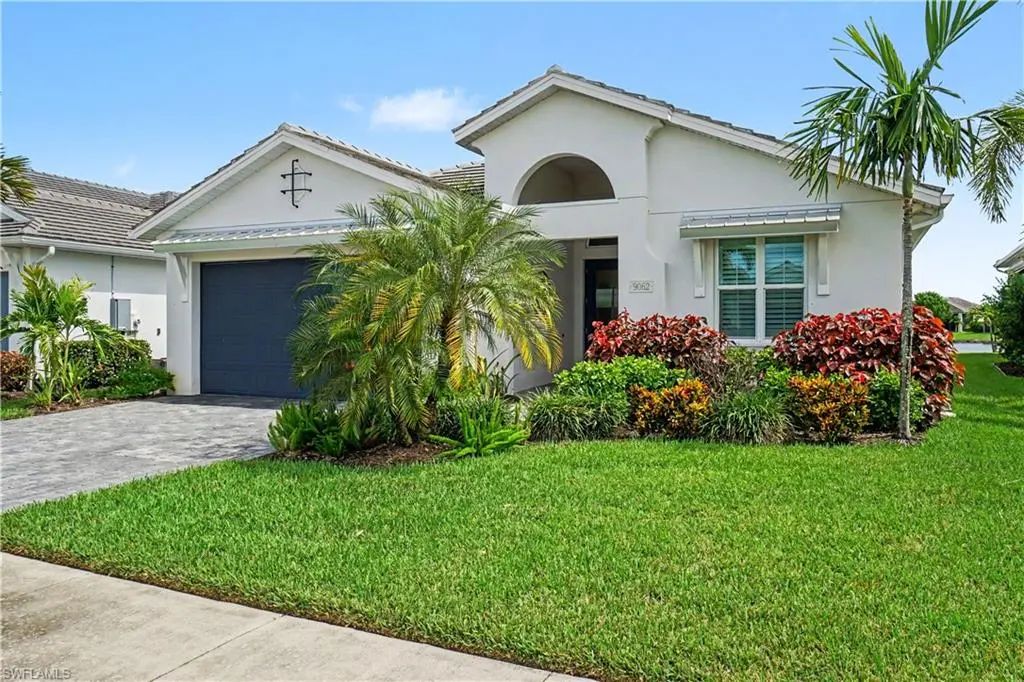
The paver driveway and tile roof of 9062 Montserrat Drive, freshly sealed and ready.
A Toll Brothers Plan, Finished Through the Design Center
The house offers 2,480 square feet of living space arranged as three bedrooms, a separate den, and two and a half baths, with an attached two-car garage. That is a floor plan with enough room to spread out and not so much that it becomes a chore to maintain.
What separates this residence from a standard build is the decision-making that happened before anyone moved in. The original owners went through the builder’s design center and selected the upgrades that show up in daily use rather than in a brochure. Wood-look tile runs through the main living areas, with carpet reserved for the bedrooms. Tray ceilings add height and architectural rhythm to the principal rooms. Plantation shutters dress the windows, and those windows are impact-resistant, which in Southwest Florida is both a convenience and a quiet form of insurance.
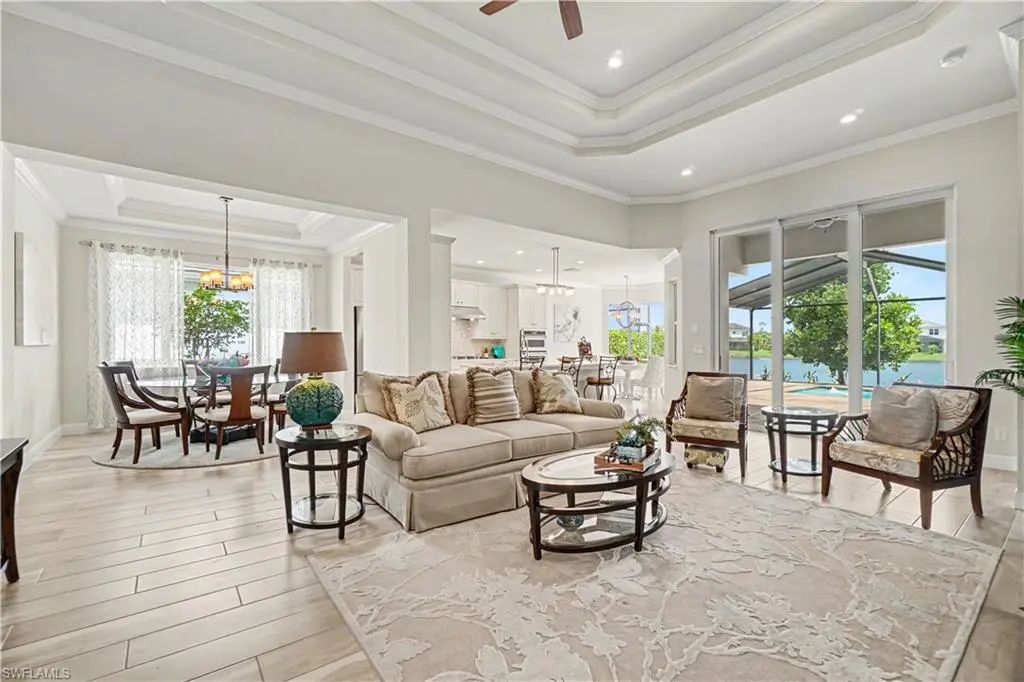
The great room runs straight to the lanai, with the lake framed beyond the glass.
The interior has just been repainted in its entirety, so the walls read as new rather than lived-in.
The Kitchen: Gas, KitchenAid, and a Wall Oven
The kitchen is where the design-center choices become most obvious. The appliance package is upgraded KitchenAid, anchored by a gas cooktop with a vented hood, a detail that matters to anyone who actually cooks and one that is far from standard in Naples new construction. A wall oven sits apart from the cooktop, the cabinetry was upgraded, and a designer backsplash ties the room together. There is a pantry for the things that should not be on the counter.
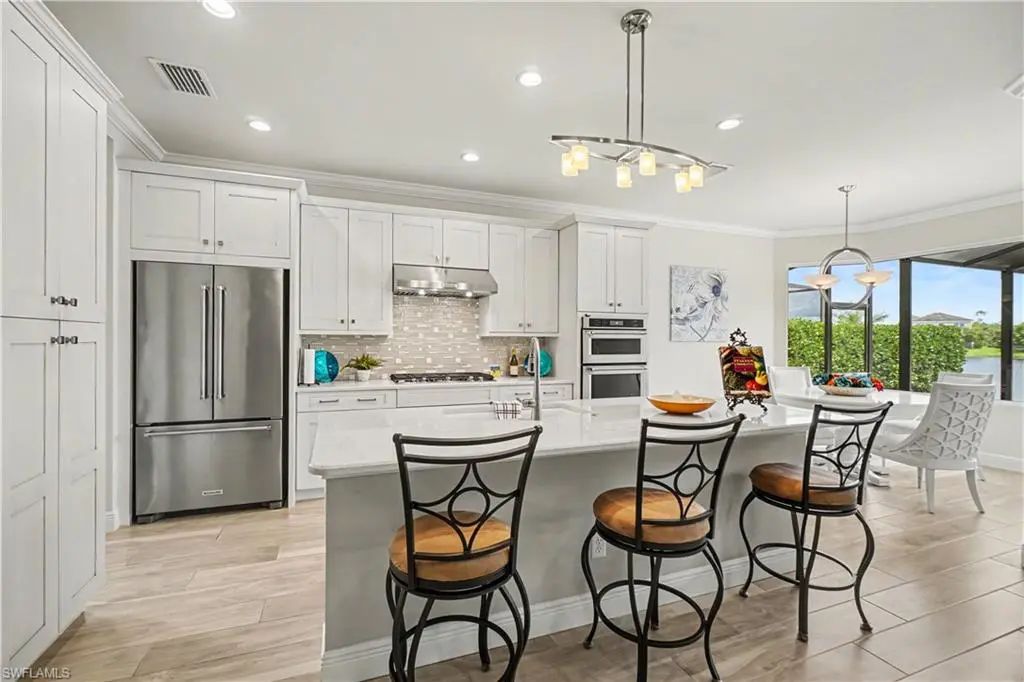
Upgraded cabinetry, a gas cooktop under a vented hood, and an island that looks toward the water.
The island is positioned so that whoever is working at it faces the living space and the lake beyond. A casual dining nook sits by the windows to one side, and a formal dining area with a tray ceiling and chandelier is there for the evenings that call for it.
The Primary Suite and the Rooms That Flex
The primary suite is the retreat it should be. The bath is finished with a freestanding soaking tub set against a feature wall of vertical tile, dual sinks on a long vanity, and a separate walk-in shower with upgraded tile.
Two additional bedrooms share a full bath, and the den is a true separate room rather than an alcove off the foyer. It is currently set up as a home office, and the arrangement makes the point: this plan supports three bedrooms plus a dedicated workspace without any of them doing double duty. A powder room serves the main living areas, and the laundry room is equipped with a gas dryer.
Outdoor Living: A Heated Pool Facing the Sunset
The lanai is the reason to buy this house. It is fully screened, paved in brick pavers that have just been pressure washed and sealed, and it holds a private gas-heated pool that looks directly across the lake. Western rear exposure means the pool deck is in sun through the afternoon and the sky over the water does what Southwest Florida skies do at dusk. An outdoor shower is tucked to one side for rinsing off before coming back in.
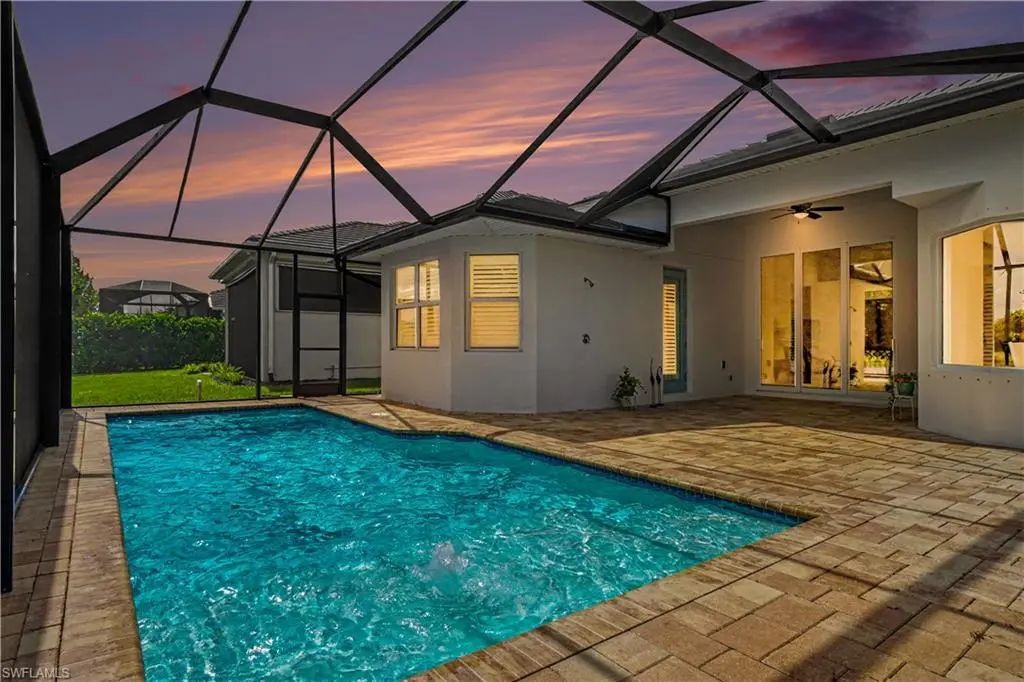
Western exposure puts the sunset directly over the pool and the lake behind it.
The practical side of the property has been handled with the same care. A whole-home Generac generator has been contracted for the house, the permit has been issued, and installation will follow pending HOA approval. A tankless water heater, a security system, an irrigation system, and a 240-volt outlet in the garage round out a list of systems that a buyer would otherwise spend the first year adding.
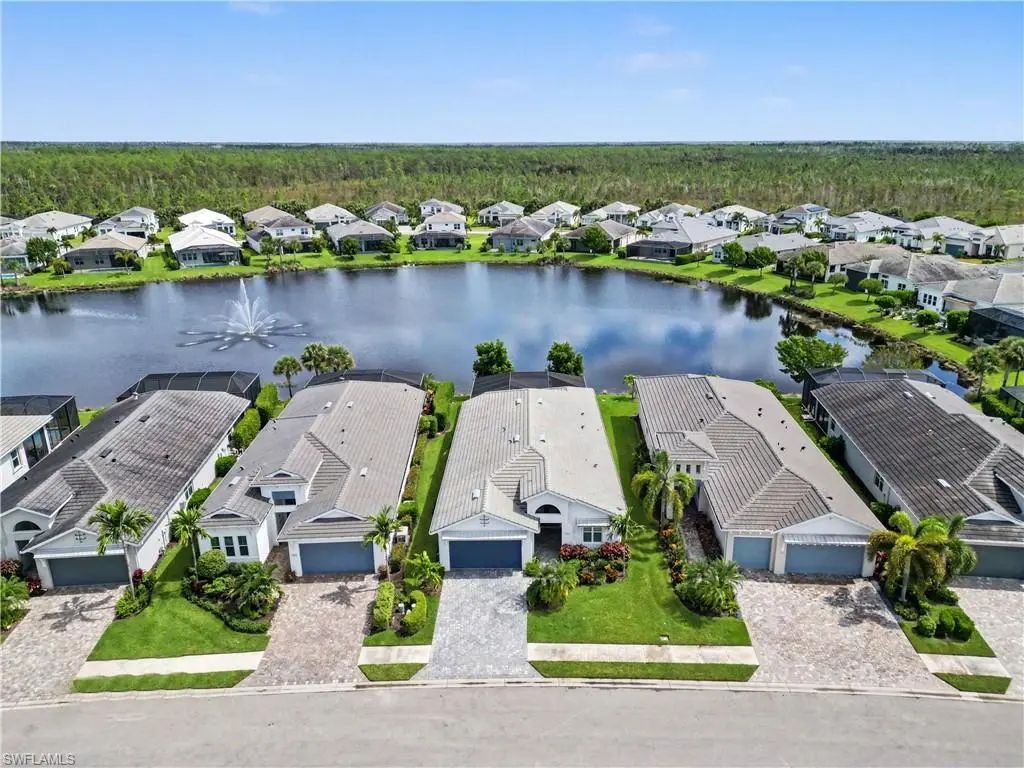
From above: the lake, the open land beyond it, and the home’s position on the water.
Azure at Hacienda Lakes
Azure is a gated Toll Brothers community within the larger Hacienda Lakes master plan on the east side of Naples. The amenity campus is built around a clubhouse with a resort-style community pool, a fitness center, pickleball and tennis courts, a billiards room, cabanas, and a series of gathering spaces inside and out. Sidewalks connect the neighborhood, and the lakes give it an open, green feel.
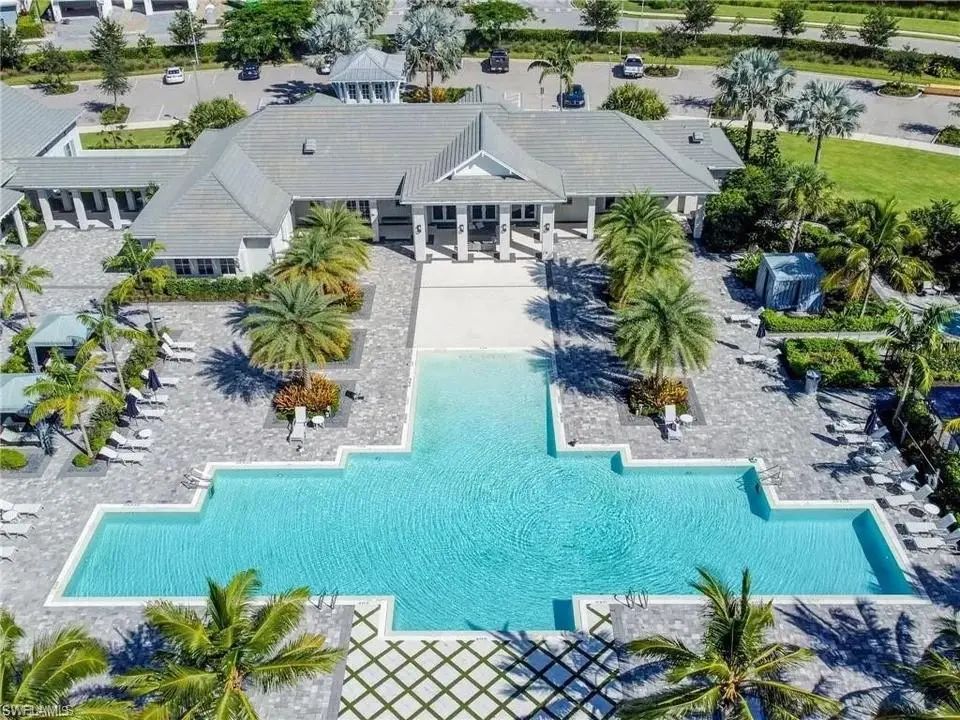
The Azure clubhouse and community pool, part of the amenity package included in the HOA.
Location is the trade this community makes, and it is a fair one. The Gulf beaches are roughly 25 minutes away. Downtown Naples, with Fifth Avenue South and Third Street South, is a comparable drive, and the shopping, dining, and services along Collier Boulevard and Tamiami Trail East are close at hand. In exchange, a buyer gets a six-year-old pool home on a lake at a price that would not reach the water closer to the Gulf. The HOA fee is $6,400 annually.
Why This One
Naples has no shortage of new construction, and new construction has a way of arriving with a long list of things still to do: window treatments, a generator, a pool heater, a sealed driveway, upgraded appliances. This home arrives with all of it done, and done to a standard set by the original owners rather than a builder’s base package. For a buyer who wants the lake, the sunset, and a kitchen that cooks, without eighteen months of contractors, 9062 Montserrat Drive is a short list of one.
Listing Details
- Address: 9062 Montserrat Dr, Naples, FL 34114
- List price: $1,025,000
- Bedrooms: 3, plus den
- Bathrooms: 2 full, 1 half
- Living area: 2,480 square feet
- Lot: 0.17 acres, lakefront, western rear exposure
- Year built: 2020, Toll Brothers
- Community: Azure at Hacienda Lakes, gated
- HOA: $6,400 per year
- MLS #: 2026039610
Listed by Annette Forester, Nicklaus Vance
256-431-9448
annette@nicklausvance.com
Powered by WPeMatico

Beyond the Sale Price: Uncovering the Hidden Costs of Selling Your Castle Rock Home
Beyond the Sale Price: Uncovering the Hidden Costs of Selling Your Castle Rock Home
You see the number online—that exciting, high-dollar estimate for your Castle Rock home. The dreams start instantly: the down payment on the next house, the vacation you’ve been planning, the boost to your savings. It’s a thrilling moment. But then, a crucial question surfaces: “How much of that will I actually keep?”

The number on the listing is just the starting point. The real story of your sale is told by your net proceeds—the final amount you walk away with after all expenses are paid. Many sellers, caught up in the excitement of a high sale price, are surprised by the significant gap between that top-line number and the final check they receive at closing.
Here at pei-realty.com, we believe that a well-informed seller is an empowered seller. As dedicated Castle Rock real estate experts, our goal is to provide transparent, high-value expertise, ensuring you understand every step of the financial journey, from listing to closing. This guide will pull back the curtain on the often-overlooked costs of selling your home in Castle Rock, so you can plan effectively, budget accurately, and ultimately maximize your profit.
Key Takeaways
- Seller costs are more than just agent commissions; they typically range from 8-10% of the final sale price when all is said and done.
- Pre-sale preparations like repairs, staging, and pre-inspections are strategic investments that can increase your final sale price and reduce time on the market.
- Closing costs for sellers include title insurance, escrow fees, prorated taxes, and potential buyer concessions.
- Partnering with an experienced local realtor is the most effective way to anticipate, manage, and potentially reduce these hidden costs.
TL;DR
Selling your home involves more than the sale price. Expect to pay for agent commissions, home preparation (repairs, staging), closing costs (title fees, taxes), and potential post-sale expenses. A knowledgeable Castle Rock real estate agent from pei-realty.com can provide a detailed net sheet to clarify your true profit.
Real estate commissions are the most significant selling expense, representing a critical investment in professional marketing and negotiation.
When sellers first consider the costs of selling, the agent commission is usually the first—and sometimes only—expense that comes to mind. While it is typically the largest single line item, viewing it merely as a fee is a mistake. A properly structured commission is an investment in expertise that drives a higher sale price, ensures a smoother transaction, and protects your interests from start to finish.
Understanding the Commission Structure
In a typical real estate transaction, the total commission is a percentage of the final sale price. This fee is not paid upfront; instead, it is deducted from the seller’s proceeds at the closing of the sale.
A crucial point to understand is that this total commission is split between the two brokerages involved in the sale: the listing brokerage (representing you, the seller) and the buyer’s brokerage (representing the buyer). By offering a competitive commission to the buyer’s agent, you incentivize all agents in the market to show your home to their qualified clients, dramatically increasing your property’s exposure. While commission rates are negotiable, it’s important to recognize that a fair rate attracts top-tier talent and marketing efforts, which can be a major factor in your financial outcome. The habit of focusing solely on the rate can sometimes lead to commission complacency, where sellers may inadvertently sacrifice service and net profit for a slightly lower fee.
What Your Commission Actually Pays For
So, what does this investment get you? It’s far more than just putting a sign in the yard and an entry on the MLS.
- Expert Pricing Strategy: A skilled agent performs a detailed Comparative Market Analysis (CMA), looking beyond simple algorithms. They analyze recent Castle Rock sales, current competition, and local market trends to position your home to attract the strongest offers without languishing on the market.
- Comprehensive Marketing: This is a major component. Your commission funds a robust marketing plan that includes professional photography and videography, compelling property descriptions, premium placement on major portals like Zillow and Realtor.com, targeted social media advertising, and leveraging a deep network of local agents and potential buyers.
- Showings & Inquiries Management: Your agent becomes the single point of contact, fielding dozens of calls, scheduling showings, vetting potential buyers for financial qualification, and providing timely feedback. This saves you an immense amount of time and stress.
- Skilled Negotiation: This is where a great agent truly earns their keep. They expertly handle offers and counter-offers to secure the highest possible price and most favorable terms. Furthermore, they navigate the critical inspection resolution phase, negotiating repair requests to protect your bottom line.
- Contract & Paperwork Management: The sale of a home involves a mountain of legally binding paperwork. Your agent manages all contracts, disclosures, addendums, and deadlines, coordinating with the title company, lender, and other parties to ensure a smooth, compliant, and successful closing.
Preparing your Castle Rock home for the market often involves strategic upfront investments that directly impact your final sale price and timeline.
Before your home ever hits the market, there are out-of-pocket expenses you should anticipate. While it can be tempting to skip these steps to save money, these preparations are some of the highest-return investments you can make. They are designed to make your home more attractive to buyers, reduce the chance of negative surprises during inspections, and ultimately command a higher selling price.
Pre-Listing Home Inspection
One of the most proactive steps a seller can take is to commission their own home inspection before listing. This may cost a few hundred dollars, but the benefits are immense. A pre-inspection allows you to uncover any potential deal-breakers—like a hidden water leak or an electrical issue—before a buyer’s inspector finds them. This knowledge gives you power. You can choose to make the repairs on your own timeline and budget, or you can gather quotes and disclose the issue upfront, pricing the home accordingly. This transparency builds trust with buyers and leads to a much smoother, faster, and less contentious negotiation process after you’re under contract.
Essential Repairs and Cosmetic Updates
It’s important to differentiate between necessary repairs and major renovations. You likely won’t recoup the cost of a full kitchen remodel, but you will absolutely see a return on fixing the small things that buyers notice.
- Necessary Repairs: Address the obvious issues. A leaky faucet, a sticky door, a cracked windowpane, or a broken light switch can signal to a buyer that the home has been poorly maintained.
- Cosmetic Updates: These are low-cost, high-impact improvements. A fresh coat of neutral paint can transform a space, making it feel brighter and cleaner. Replacing dated light fixtures, cabinet hardware, or switch plates are inexpensive updates that modernize the home’s feel. In a place like Castle Rock, ensuring your deck is freshly stained and in good shape for enjoying the Colorado views is a must.
Staging and Curb Appeal
First impressions are everything in real estate. Buyers often make a subconscious decision about a home within the first few seconds of seeing it.
- Curb Appeal: This is your home’s first handshake. Simple actions like mowing the lawn, trimming bushes, planting fresh flowers, power washing the siding and driveway, and painting the front door can dramatically improve how your home is perceived from the street.
- Home Staging: Staging is the art of preparing a home to appeal to the greatest number of potential buyers. At a minimum, this involves a deep cleaning and decluttering every single room. For maximum impact, consider professional staging. A stager can rearrange your existing furniture or bring in their own to highlight the home’s best features and help buyers visualize themselves living in the space. According to a report from the National Association of Realtors, 81% of buyers’ agents said staging a home made it easier for a buyer to visualize the property as a future home.
Seller closing costs are a significant category of expenses beyond commissions, typically adding another 1-3% of the home’s sale price.
Once you accept an offer, the journey to the closing table begins. During this period, a new set of costs emerges, collectively known as seller closing costs. These are the fees required to legally transfer ownership of the property. According to Zillow, sellers can typically expect to pay between 1% and 3% of the home’s sale price in closing costs. For a $600,000 home in Castle Rock, that could mean an additional $6,000 to $18,000.
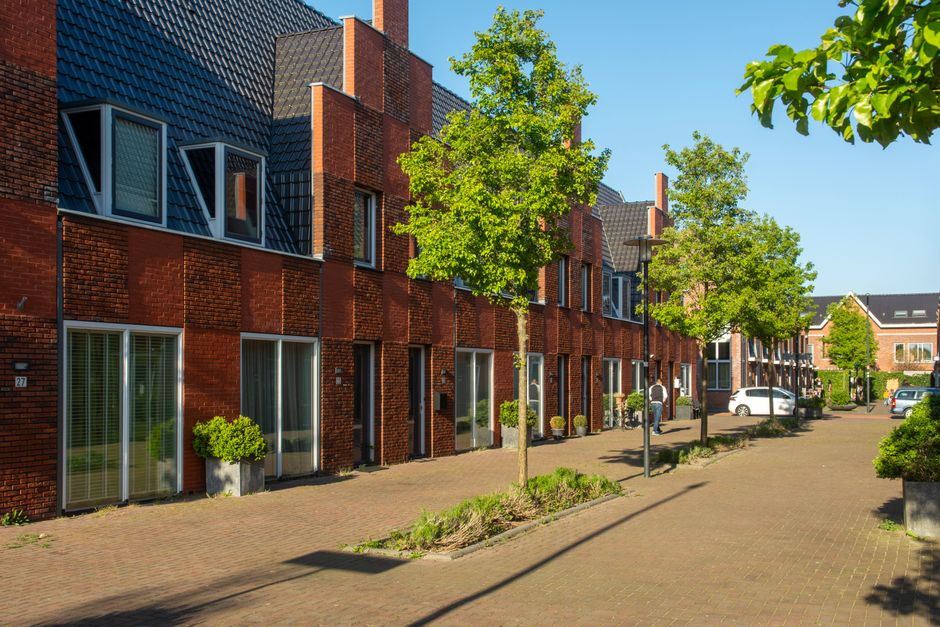
Title Insurance & Escrow Fees
- Owner’s Title Insurance
- In Colorado, it is customary for the seller to purchase an owner’s title insurance policy for the buyer. This policy protects the new owner from any future claims against the property’s title from before their ownership (e.g., an unknown lien or a past ownership dispute).
- Escrow Fees
- An escrow company acts as a neutral third party that holds all funds and documents related to the sale. They ensure that the money is transferred and the title is recorded only when all conditions of the contract are met. The fee for this service is typically split between the buyer and seller.
Prorated Property Taxes and HOA Dues
You are responsible for property taxes and any Homeowners’ Association (HOA) dues for the time you owned the home. These are “prorated” at closing. For example, if you close on your home on June 30th and property taxes are paid annually, you will be responsible for paying your share from January 1st to June 30th. This amount is calculated by the title company and will be deducted from your proceeds.
Seller Concessions
This is a variable cost that arises during negotiations. A seller concession is an arrangement where you, the seller, agree to pay a portion of the buyer’s closing costs. Why would you do this? It can be a powerful negotiation tool. In a competitive market, offering to cover some of the buyer’s costs can make your offer more attractive. It can also help a buyer who is well-qualified for a mortgage but is short on the cash needed for their down payment and closing costs, allowing you to close the deal at a higher sale price.
Other Potential Fees
Depending on the specifics of your transaction, a few other minor fees might appear on your settlement statement:
- Transfer Taxes: Fees charged by the county or state to transfer the title.
- Attorney Fees: If you choose to have an attorney review your documents.
- Reconveyance and Recording Fees: Small fees to record the new deed and clear the old mortgage from public records.
For a comprehensive look at all our resources, you can explore our site’s content via our post sitemap and page sitemap.
A knowledgeable Castle Rock realtor is your best asset for navigating and minimizing these hidden costs.
As you can see, the path from listing to closing is paved with numerous expenses, both expected and unexpected. Trying to navigate this complex financial landscape alone can be overwhelming and costly. This is where the expertise of a seasoned local real estate professional becomes invaluable, transforming from a cost into your most powerful profit-maximizing asset.
The Seller’s Net Sheet: Your Financial North Star
The most important tool for understanding your true profit is the Seller’s Net Sheet. This is a detailed, line-by-line estimate of all the costs discussed in this article—from commission to title fees to tax prorations—subtracted from your estimated sale price. It provides a clear, realistic projection of the money you will receive at closing.
At pei-realty.com, we provide a complimentary, custom net sheet for our clients at the very beginning of the process. This transparency is fundamental to our service and helps you make informed decisions from day one. There should be no surprises at the closing table.
Strategic Advice on Pre-Sale Investments
An expert agent does more than just tell you to paint and declutter. They provide strategic advice based on deep knowledge of the Castle Rock market. They know which updates provide the best return on investment and which ones you can skip. They can connect you with a network of trusted and affordable local vendors—from handymen to stagers—preventing you from over-investing in projects that won’t actually increase your final sale price. You can browse our various content categories for more tips on home improvement and market trends.
Masterful Negotiation to Protect Your Bottom Line
A great negotiator’s value extends far beyond the initial offer price. They are your advocate during the critical inspection phase, skillfully negotiating repair requests to save you thousands. They can strategically deploy seller concessions to secure a deal without giving away too much. They manage timelines and contingencies, all of which have a direct financial impact on your net proceeds. Their job is to protect your equity at every turn.
Your Path to a Profitable Sale
The journey from “Sale Price” to “Net Profit” is filled with necessary costs that are integral to a successful transaction. Being aware of these expenses isn’t meant to be discouraging; it’s meant to be empowering. Knowledge is the key to a successful, profitable, and stress-free home sale.
You don’t have to navigate this complex process alone. An expert guide can illuminate the path, help you budget effectively, and fiercely protect your hard-earned equity. Selling your Castle Rock home is a major financial milestone. By arming yourself with knowledge and partnering with a professional dedicated to transparency and expertise, you can move forward with confidence, knowing you are making the best possible decisions for your financial future.
Frequently Asked Questions
What are ‘net proceeds’ from a home sale?
Roughly what percentage of the sale price should I expect to pay in selling costs?
What are some common costs of selling a home besides the real estate agent’s commission?
Why is it important to understand all the costs involved in selling my home?

Navigating St. Tammany Parish Real Estate Law: Insights from the Team at Arena Collective
You’ve found your dream home in Covington, a perfect waterfront property with sunset views over the lake. Or perhaps you’re ready to sell your charming Mandeville cottage and move on to the next chapter. But in St. Tammany Parish, the journey from “For Sale” to “Sold” involves a unique legal landscape that can feel overwhelming. The rules here are different, rooted in a history that sets Louisiana apart from the rest of the country.

This is where the Arena Collective at pei-realty.com excels. As a dedicated team of local real estate professionals, our expertise goes beyond market trends and pricing strategies. We specialize in guiding clients through the specific legal nuances, parish regulations, and contractual obligations that define every transaction on the Northshore. This article will break down the key aspects of St. Tammany Parish real estate law, providing clear, actionable insights directly from our team to empower you in your transaction.
Key Takeaways
- Louisiana’s Civil Law system, based on the Napoleonic Code, creates unique property rights and inheritance laws (successions) that differ significantly from the common law systems in 49 other states.
- Thorough due diligence on title searches, flood zones, and parish-specific servitudes is non-negotiable in St. Tammany to avoid costly future surprises and protect your investment.
- The Louisiana Residential Agreement to Buy or Sell is a highly specific, legally binding document; understanding its strict contingencies and deadlines is crucial for both buyers and sellers.
- Partnering with a real estate team that possesses deep local legal knowledge, like the trusted St. Tammany Parish, LA professionals at Arena Collective, is the most effective way to protect your interests and ensure a smooth closing.
TL;DR
Navigating St. Tammany Parish real estate requires understanding Louisiana’s unique Civil Code, especially regarding property rights and successions. Buyers and sellers must be vigilant about parish-specific issues like flood zones and servitudes. The team at Arena Collective provides the expert local guidance needed to manage these legal complexities for a secure and successful transaction.
Understanding Louisiana’s Unique Napoleonic Code is the First Step to Navigating St. Tammany Parish Real Estate Transactions.
Before you can appreciate the specifics of a property listing in Slidell or a contract in Madisonville, you must first understand the legal foundation of the entire state. Unlike the rest of the nation, Louisiana’s legal framework is a direct descendant of the Napoleonic Code, creating a distinct set of rules for property ownership and transfer.
What Makes Louisiana Law Different: Civil Law vs. Common Law
The United States, with one exception, operates under a common law system inherited from England. This system relies heavily on judicial precedent—the collection of past court rulings. Louisiana, however, operates under a civil law system derived from French and Spanish traditions. As noted by the Louisiana State Bar Association, civil law is based on a comprehensive, codified set of statutes and laws that serve as the primary source of legal authority. For real estate, this means property rights, marital assets, and inheritance are defined with a different logic and vocabulary.
Key Concepts You’ll Encounter in St. Tammany Parish
This unique legal heritage introduces several critical concepts you will likely encounter during your transaction. Understanding them is essential.
- Community Property: In Louisiana, assets acquired by a couple during their marriage are generally considered “community property,” meaning they are owned equally by both spouses. This has significant implications for how a property can be bought, sold, or encumbered, as the consent of both spouses is often required.
- Forced Heirship & Successions: This is perhaps the most significant legal hurdle in Louisiana real estate. Louisiana law has provisions for “forced heirship,” which can require a portion of an estate to be left to specific heirs. A succession is the legal process of settling a deceased person’s estate and formally transferring property to their heirs. A property cannot be legally sold until the succession is formally completed and the title is cleared, a process that can be complex and time-consuming if not handled correctly.
Arena Collective Insight:
Our team always verifies that any succession issues have been fully resolved early in the process, preventing major delays right before closing. We’ve seen promising deals fall apart weeks before the closing date because an unresolved succession from a previous owner was discovered late in the game. This foundational check is a cornerstone of our due diligence for clients and a non-negotiable step in protecting their interests.
A Clean and Clear Title is Paramount in St. Tammany Parish, as Unresolved Issues Like Liens or Successions Can Derail a Sale.
The single most important legal document in your transaction is the property’s title. It is the official record of ownership. Ensuring it is “clean and clear” means proving that the seller has the undisputed legal right to transfer the property to you, free from any outside claims.
The Purpose of a Thorough Title Search
A title search is a comprehensive investigation into a property’s public records. A title company or real estate attorney examines decades of documents—deeds, mortgages, wills, tax records, and court judgments—to construct a chain of ownership and identify any potential problems. The goal is to confirm the seller’s legal right to sell and uncover hidden issues that could affect your ownership.
Common Title Problems We See in the Parish
In our experience across St. Tammany Parish, from Abita Springs to Pearl River, several common title defects can emerge:
- Unresolved Successions: An heir from a previous generation may still have a legal claim to the property.
- Liens: These are legal claims against the property for an unpaid debt. Common examples include unpaid property taxes, liens from contractors (known as a “mechanic’s lien”), or outstanding judgments from a lawsuit.
- Boundary or Survey Disputes: A neighbor’s fence might be encroaching on the property line, or an old survey may be inaccurate, creating confusion about the property’s true boundaries.
- Clerical Errors in Public Records: Simple mistakes in deeds or other recorded documents from years past can create significant title clouds.
Why Title Insurance is Your Ultimate Protection
No matter how thorough a title search is, hidden hazards can still exist. This is where title insurance becomes essential.
St. Tammany Parish Has Specific Zoning Regulations, Flood Zone Requirements, and Servitude Laws That Every Buyer and Seller Must Be Aware Of.
Beyond statewide laws, real estate is hyper-local. St. Tammany Parish has its own set of rules that directly impact property value, usage, and cost of ownership. Overlooking these local specifics is a common and costly mistake.
Checking the Zone: Parish-Specific Land Use Rules
Before you buy, you must verify that your intended use for the property aligns with St. Tammany Parish’s zoning ordinances. Are you hoping to run a small business from home? Do you plan on offering the property as a short-term rental? Zoning laws dictate what is permissible in residential, commercial, and mixed-use areas. A quick check with the parish planning and zoning department can prevent a major legal headache down the road.
A Northshore Necessity: Navigating Flood Zones and Insurance
Given its proximity to Lake Pontchartrain, the Tchefuncte River, and numerous bayous, understanding flood risk is critical in St. Tammany. The Federal Emergency Management Agency (FEMA) creates detailed flood maps that assign zones to every property. According to FEMA, these zones indicate the level of risk and have a direct impact on building requirements and insurance costs.

- Zone X: Areas of minimal to moderate flood risk. Flood insurance is typically not required by lenders but is often recommended.
- Zone AE: High-risk flood zones. Flood insurance is mandatory for properties with a federally backed mortgage.
The flood zone designation can add thousands of dollars to your annual homeownership costs, making it a crucial piece of your due diligence.
Understanding Servitudes (Easements)
In Louisiana, an easement is referred to as a servitude.
Servitude: A legal right that allows someone else to use a portion of your property for a specific purpose, even though you are the owner.
Common servitudes in St. Tammany include utility access for power lines or drainage ditches that run along the edge of a property. A shared driveway is another frequent example. These servitudes are attached to the deed and can restrict your ability to build a fence, shed, or pool in certain areas.
Arena Collective Insight:
We recently helped a client discover a forgotten drainage servitude running across the back of a property they loved in a new development. Their dream was to install a large swimming pool. By identifying the servitude early during our review of the property’s survey, we were able to negotiate with the seller and consult with the parish to ensure our client’s plans for their backyard oasis were still possible. This is the kind of proactive, detailed work that defines the Arena Collective’s expert services expertise.
The Louisiana Residential Agreement to Buy or Sell is a Legally Binding Contract with Specific Timelines and Contingencies That Protect Both Parties.
The purchase agreement is the central nervous system of your real estate transaction. In Louisiana, the state-mandated Residential Agreement to Buy or Sell is a detailed, multi-page document that leaves little room for ambiguity. It is not a simple offer; once signed by both parties, it is a legally enforceable contract.
Beyond the Offer Price: Critical Clauses to Understand
While the price is important, the contingencies and deadlines within the contract are what truly protect you.
- Inspection and Due Diligence Period: This clause grants the buyer a specific number of days to conduct all desired inspections—from a general home inspection to more specialized checks for termites, mold, or structural issues. If unsatisfactory results are found, the buyer typically has the right to request repairs or terminate the contract.
- Financing Contingency: This is a crucial protection for the buyer. It states that the purchase is contingent upon the buyer’s ability to secure a loan on specified terms. If the buyer cannot get financing within the allotted time, they can exit the contract without losing their deposit.
- Property Disclosures: Louisiana law requires sellers to provide a Property Disclosure Document, revealing any known defects in the property. Honesty here is not just good practice; it’s a legal obligation.
The Power of Deadlines in Real Estate Contracts
Every date in the Louisiana purchase agreement matters. Missing a deadline—whether for completing inspections, securing loan approval, or delivering a deposit—can put you in breach of contract, potentially resulting in the loss of your deposit or even legal action. Meticulous tracking of these dates is a critical function of an experienced real estate agent.
The Arena Collective at pei-realty.com Acts as Your Strategic Guide, Bridging the Gap Between Complex Real Estate Law and a Smooth, Successful Transaction.
Understanding these legal principles is one thing; applying them effectively to a live transaction is another. This is where our team’s role extends far beyond showing homes or marketing a listing. We serve as your strategic partners, dedicated to navigating the legal complexities on your behalf.
How We Proactively Identify Legal Red Flags
Our process begins long before an offer is written. We scrutinize property histories, review seller disclosures, and pull parish records to spot potential issues before they can become deal-breakers. By asking the right questions about successions, servitudes, and property boundaries upfront, we mitigate risk and position our clients for a stronger negotiating stance. This proactive approach is a hallmark of the service provided by Arena Collective, known for their specialized solutions in complex real estate matters.
Our Vetted Network of Local Experts
A successful transaction requires a team of specialists. We have cultivated a trusted network of St. Tammany Parish’s top real estate attorneys, title companies, surveyors, and home inspectors. These are professionals who understand the local landscape and share our commitment to client protection. When a legal question or a complex survey issue arises, we connect you with the right expert immediately, ensuring you receive accurate advice without delay. The variety of properties and legal situations you might encounter can be explored further by reviewing our extensive resources, such as our post sitemap.
We Are Your Advocates from Offer to Closing
Ultimately, our role is to be more than just agents. We are project managers and fierce advocates dedicated to protecting your legal and financial interests. From drafting an offer with contingencies that safeguard your position to meticulously monitoring contract deadlines and reviewing closing documents for accuracy, we manage every detail. Our goal is to ensure you arrive at the closing table with complete confidence, knowing every legal “i” has been dotted and “t” has been crossed. This comprehensive management of the entire process is detailed across our main site pages.
Your Path to a Legally Sound Transaction
While the real estate laws of St. Tammany Parish have their unique complexities, from the Napoleonic Code to hyper-local flood zone rules, they are entirely manageable with the right expertise and a proactive approach. Knowledge is your first line of defense, and a skilled guide is your most powerful tool.
The deep, localized knowledge of the Arena Collective is your greatest asset in ensuring a transaction that is not only successful but also legally sound. In a market where details matter immensely, don’t leave your largest investment to chance. By understanding the legal framework and partnering with a team that prioritizes your protection, you can navigate the Northshore real estate market with confidence and clarity. Whether you are interested in a specific type of property or a particular community, our category pages offer a wealth of targeted information.
Frequently Asked Questions
What makes real estate law in St. Tammany Parish different from other places in the U.S.?
What are some key legal considerations when buying property on the Northshore?
The article mentions ‘successions.’ What does that mean in the context of real estate?
Why is it important to have a real estate professional with local legal expertise in St. Tammany Parish?
The Grand Traverse Masterpiece Built for Gathering
Picture gathering around the kitchen island on holiday mornings, voices streaming in from two living rooms, game nights on the lower-level, and quiet mornings on the private deck looking out over the Gore Range. That’s one slice of life this Grand Traverse home was designed for.
Tucked near the end of a cul-de-sac in Vail’s exclusive Grand Traverse neighborhood, and just steps from the Town of Vail bus line, this custom-built single-family home offers uninterrupted mountain views and a floor plan designed with family life in mind.

Space for Everyone, Privacy for All
With five bedrooms and 6.5 baths spread across three thoughtfully designed levels, this home solves the puzzle every multi-generational or large family knows well: how to spend quality time together while giving everyone privacy.
The main floor sets the tone with vaulted ceilings; a stacked-stone fireplace; and an open layout connecting the kitchen, living, and dining spaces. The main floor primary suite offers true one-level living, complete with an adjacent office, double walk-in closets, and a five-piece bath with a jetted tub and steam shower.
Upstairs, three oversized bedrooms enjoy their own ensuite bath, walk-in closet, private sitting area, and private deck, plus access to a second full-size washer and dryer.
The lower level is where the home truly shows its range with two separate living spaces, a fourth bedroom and full bath, a second sauna, a built-in-desk office, an outdoor fireplace, and a third laundry area. It’s a floor that can flex from quiet guest suite to full-blown entertainment headquarters.

A Kitchen Built for Real Cooking
The chef’s kitchen anchors the home with a large center island, two sinks, two dishwashers, a double oven, an industrial-grade refrigerator, a breakfast bar, and a large pantry. The adjoining breakfast area doubles as formal dining space and comes with its own wet bar, while a main-level laundry and mudroom offer abundant custom built-in storage to keep mountain life organized.
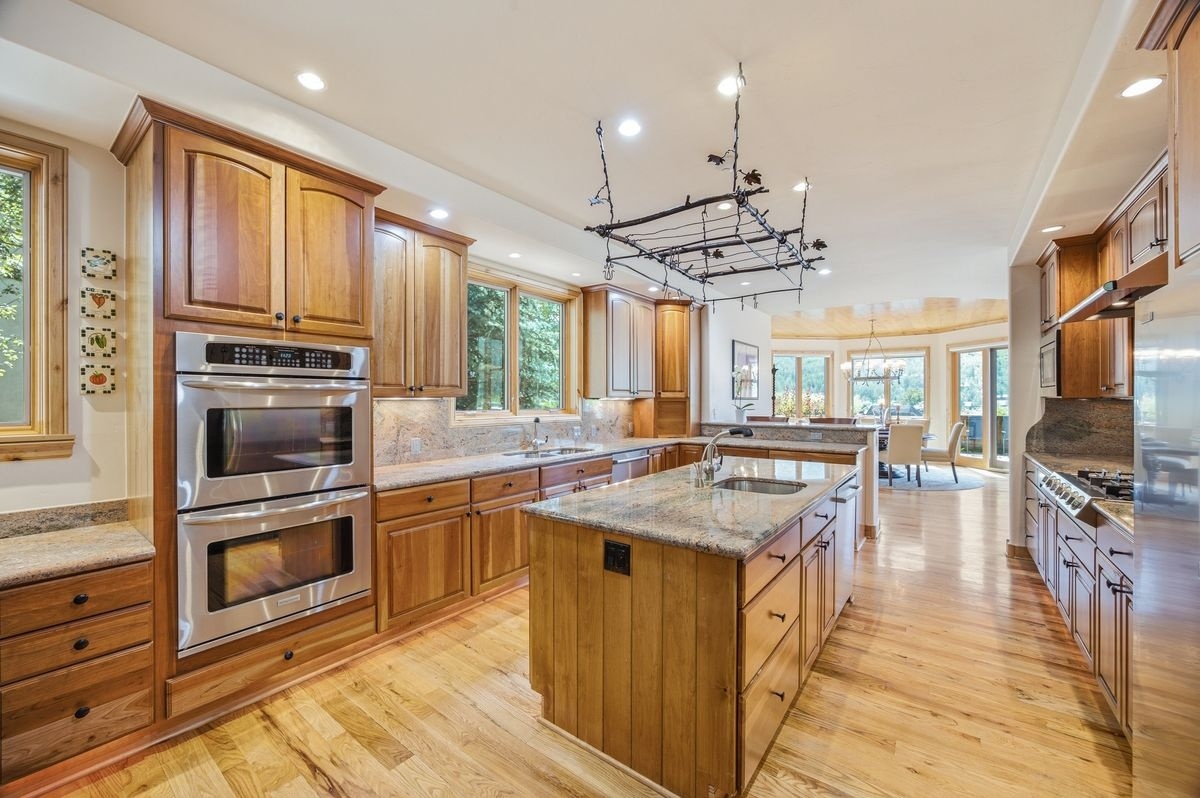
The Ultimate Entertaining Space
Descend to the lower level and you’ll find what might be the home’s signature feature: a recreation room outfitted with a ping-pong table; full-size shuffleboard; a dart board; and a full bar with refrigerator, sink, dishwasher, and ice maker. Three flat-screen TVs and a Savant surround sound system complete the space, making it the natural gathering point for game days, après-ski, or a rainy afternoon indoors.
Outside, a large deck with a hot tub overlooks a private yard. Everyday details like a heated three-car garage with an electric vehicle charger and a heated driveway and sidewalks accommodate the Vail lifestyle.

Grand Traverse Living
Grand Traverse is one of Vail’s most sought-after residential enclaves, offering the rare combination of privacy, space, and proximity. 1418 Moraine Drive balances quiet cul-de-sac living with easy access to the Town of Vail bus system and everything the valley has to offer.
For families who entertain, host, and gather often, this home doesn’t ask to choose between luxury and togetherness. It offers both.
For more information, click here or contact Ann Foster at afoster@livsothebysrealty.com.

Powered by WPeMatico
Victoria Garden Townhomes Decatur
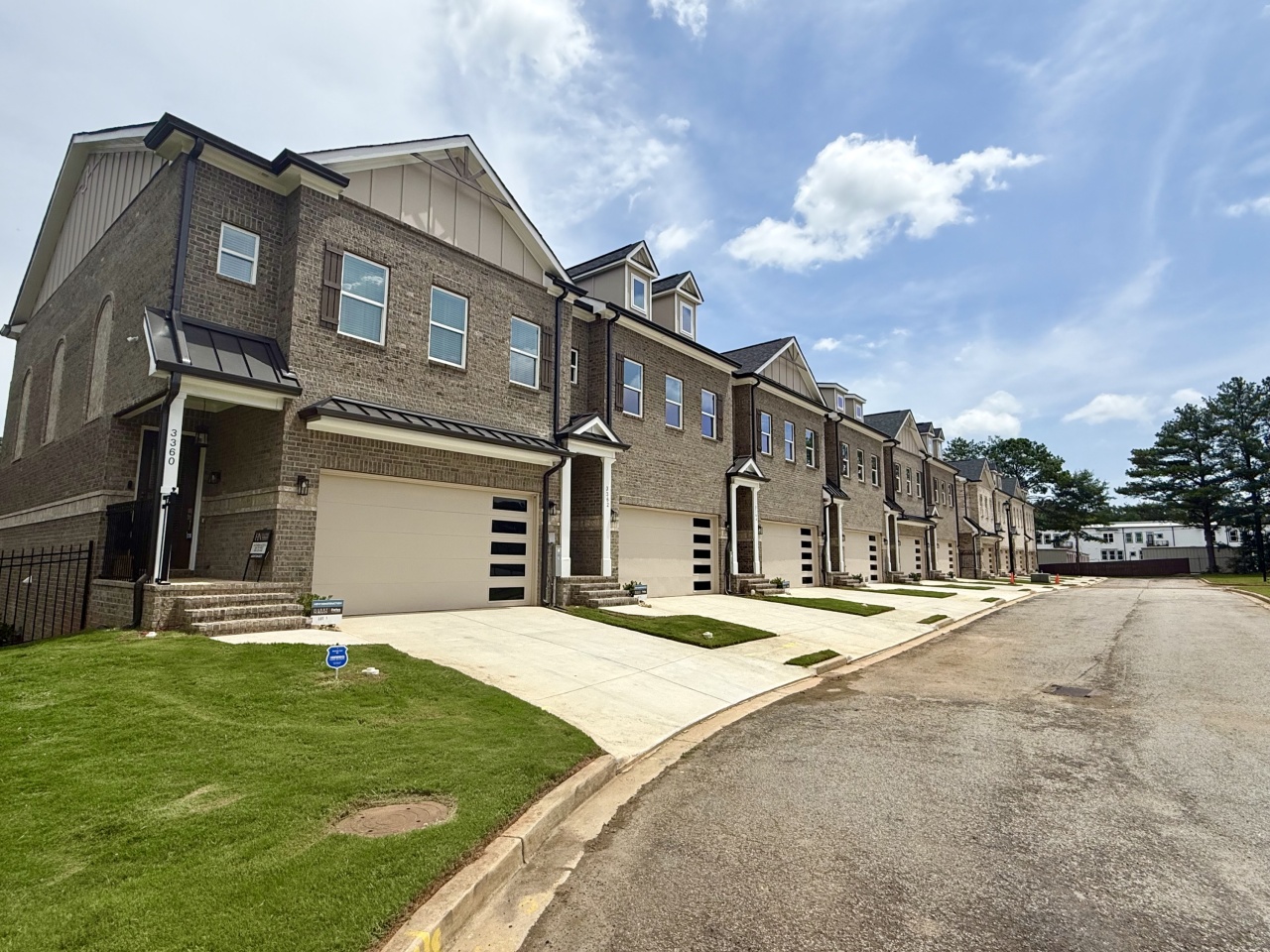
Victoria Garden Townhomes Decatur A Private Gated Community in Decatur, GA 30032
Positioned just minutes from Emory University and the Centers for Disease Control and Prevention, the community is perfectly suited for medical professionals, executives, and buyers seeking convenience with long-term real estate value.
Luxury New Construction Designed for Modern Living
Fully Finished Basement Flexibility
Prime Location Near Avondale Estates & Downtown Decatur
Seamless Connectivity Across Metro Atlanta
A Strategic Investment in Decatur Real Estate
Contact Atlanta HorizonView About This Complex
Address: 3360 Sarah Trail, Decatur, GA 30032
Condo Type: Townhomes
Area: Decatur 30032
Powered by WPeMatico

Beyond the Commission: Unpacking the True Costs of Selling Your PEI Property
Beyond the Commission: Unpacking the True Costs of Selling Your PEI Property
Selling your Prince Edward Island home is an exciting step, but focusing only on the final sale price can be misleading. The number that truly matters is your net profit—what you walk away with after all expenses are paid. A high sale price can quickly be eroded by a series of overlooked costs, leaving you with less than you anticipated. The key to a successful and profitable sale is understanding the complete financial picture from the very beginning.

At pei-realty.com, we believe in empowering our clients with complete transparency. As dedicated PEI real estate experts, our goal is to guide you through every step of the selling process, ensuring there are no financial surprises along the way. We provide the expertise needed to navigate the complexities of the market and protect your equity.
This guide unpacks all the potential costs of selling your PEI property, moving far beyond the standard commission to give you a clear and realistic financial picture.
Key Takeaways
- Seller costs in PEI extend far beyond the real estate commission, often including legal fees, property tax adjustments, and pre-listing preparation expenses.
- Preparing your home for sale with minor repairs, staging, and professional photography is an investment that can significantly increase your final sale price and reduce time on the market.
- Legal fees are a mandatory closing cost for transferring property ownership and ensuring all documents are correctly filed with the province.
- Working with an experienced PEI realtor can help you anticipate, manage, and even reduce these costs, maximizing your net proceeds through strategic advice and negotiation.
TL;DR
Selling a property in PEI involves more than just the agent’s commission. Sellers must budget for pre-listing costs like repairs and staging, mandatory closing costs such as legal fees and tax adjustments, and potential post-sale expenses like moving costs. A knowledgeable realtor is essential for navigating these expenses and maximizing the final profit from your sale.
The Real Estate Commission is Just the Starting Point for a Seller’s Expenses
While it’s the largest and most well-known fee, the real estate commission is a fee for a comprehensive service that covers a wide range of marketing, negotiation, and administrative tasks essential for a successful sale. Think of it as the tip of the iceberg; it’s the most visible cost, but there are many other expenses lurking below the surface. Understanding the role of commission is crucial, but it’s only the first step in calculating your net proceeds.
What the Commission Covers
When you partner with a real estate professional, the commission you pay funds a full-scale operation designed to get you the best possible price in the shortest amount of time. This isn’t just a fee for unlocking the door; it’s payment for expertise and resources, including:
- Marketing and Advertising: This covers professional photography, virtual tours, floor plans, placement on the Multiple Listing Service (MLS), targeted online advertising campaigns, and print materials.
- Showings and Open Houses: Your agent coordinates and hosts all private showings and public open houses, managing inquiries and scheduling to present your home in the best light.
- Expert Negotiation: An experienced agent acts as your advocate, negotiating with buyers’ agents on price, conditions, closing dates, and other terms to protect your interests.
- Complex Paperwork: From the listing agreement to the final purchase and sale agreement, your agent handles all documentation, ensuring accuracy and legal compliance.
- Brokerage and Administrative Support: A portion of the commission supports the brokerage’s administrative staff, legal oversight, and technology systems that facilitate the transaction.
Pre-listing Costs are Investments Made to Maximize Your Property’s Market Value
Before your home even hits the market, strategic spending can significantly boost its appeal and potential sale price. These are not merely expenses; they are investments in your final return. Neglecting these areas can lead to lowball offers or a longer time on the market, which has its own associated costs, such as continued mortgage payments, property taxes, and utilities.
Home Staging and Professional Photography
In today’s digital-first real estate market, first impressions are made online. Professional photos are non-negotiable. Poor-quality, poorly lit smartphone pictures can deter potential buyers before they even consider a showing. Home staging, whether it involves a full professional service or simply decluttering and rearranging your existing furniture, helps buyers visualize themselves living in the space. It highlights your home’s best features and creates an emotional connection that can lead to a faster, higher offer.
Pre-Sale Home Inspection and Repairs
Conducting a pre-sale home inspection gives you a strategic advantage. It allows you to identify and address potential issues on your own terms, rather than being caught off guard during buyer negotiations. Discovering a major issue in the buyer’s inspection report can lead to costly last-minute repairs, a significant price reduction, or even the collapse of the deal. Addressing common problems like leaky faucets, touching up paint, or replacing a broken light fixture beforehand demonstrates pride of ownership and gives buyers confidence in the property’s condition.
Enhancing Curb Appeal
The first thing a buyer sees is the exterior of your home. A property with strong curb appeal feels welcoming and well-maintained from the moment buyers pull up. This doesn’t have to be expensive. Simple actions can have a huge impact:
- Mowing the lawn and weeding the garden beds.
- Planting seasonal flowers in pots or beds.
- Power washing the siding, deck, and walkways.
- Painting the front door a fresh, inviting color.
- Ensuring house numbers are clean and visible.
Closing Costs are the Mandatory Fees Required to Finalize the Property Transfer
Once you accept an offer, a series of administrative and legal costs are triggered to legally transfer ownership of your PEI property to the buyer. These fees are detailed on the statement of adjustments provided by your lawyer just before closing and are often overlooked by first-time sellers.
Legal Fees and Disbursements
A real estate lawyer is required to facilitate the closing of a property sale in Prince Edward Island. Their role is to protect your interests and ensure a smooth transfer of title. Legal fees cover the lawyer’s time and expertise, while disbursements are the out-of-pocket costs they incur on your behalf. These services typically include reviewing the purchase agreement, preparing the deed, facilitating the transfer of funds, paying out any existing mortgages, and ensuring all legal documents are correctly filed. Legal fees for a seller in PEI can vary, but it’s wise to budget accordingly.
Property Tax Adjustments
Property taxes in PEI are typically paid for the calendar year. When you sell your home, you are responsible for the taxes up to the closing date. If you have already paid your property taxes for the full year, the buyer will reimburse you for their portion—from the closing date to the end of the year. This credit to you will appear on the statement of adjustments. Conversely, if taxes are due but not yet paid, you will need to credit the buyer for your portion of the year.

Mortgage Discharge and Prepayment Penalties
If you have an existing mortgage on the property, your lender will charge a fee to discharge it from the title. This administrative fee is usually a few hundred dollars. However, a much more significant cost can be a mortgage prepayment penalty. If you are breaking a closed mortgage before the end of its term, your lender may charge a penalty, which can be equivalent to three months’ interest or the interest rate differential (IRD). This can amount to thousands of dollars, so it’s crucial to speak with your lender early in the process to understand what, if any, penalty will apply.
PEI-Specific Considerations: Well and Septic Certificates
For many rural properties on Prince Edward Island that are not connected to municipal services, sellers are often required to provide proof that the well and septic systems are in good working order. This typically involves:
- Water Potability Test: A recent water test confirming the well water is safe for consumption.
- Septic Pumping and Inspection: A certificate from a licensed professional confirming the septic tank has been recently pumped and appears to be functioning correctly.
The costs for these tests and services are the seller’s responsibility.
Miscellaneous Expenses Can Arise Both During and After the Sale is Complete
The costs don’t necessarily stop the moment you hand over the keys. Planning for these final expenses ensures a smooth transition out of your old home and into your new one, preventing financial stress during an already busy time.
Moving and Relocation Costs
Whether you hire a professional moving company or opt for a DIY move with a rental truck, there will be costs involved. These can include packing supplies (boxes, tape, bubble wrap), temporary storage if your moving dates don’t align perfectly, and fees for transferring utilities like electricity, internet, and heating oil to your new address.
Capital Gains Tax
For most Canadians selling their home, there is good news: you typically do not have to pay capital gains tax. The Canada Revenue Agency’s (CRA) Principal Residence Exemption allows you to sell your primary home tax-free. However, this exemption may not fully apply if the property was not your principal residence for every year you owned it. This can occur if you:
- Owned a second property, like a cottage.
- Rented out the property or a portion of it.
- Used the property for business purposes.
In these situations, a portion of the profit may be subject to capital gains tax. It is always recommended to consult with an accountant to understand your specific tax obligations.
An Expert PEI Realtor Helps You Navigate These Costs to Protect Your Bottom Line
A great agent does more than just list your home; they act as your financial strategist, helping you make informed decisions at every stage to maximize your net profit. This is where true value and expertise come into play, and it’s the core of our philosophy at pei-realty.com. Our role is to provide the professional guidance that turns a potentially stressful process into a financially rewarding one.
Strategic Pricing and Negotiation
Setting the right asking price from the start is one of the most critical steps. An overpriced home can sit on the market, accumulating carrying costs and eventually selling for less than it would have if priced correctly. We provide a comprehensive market analysis to determine an accurate listing price that attracts serious buyers. During negotiations, our expertise extends beyond the final price to include terms that can save you money, such as a favorable closing date or negotiating which items are included or excluded from the sale.
A Network of Trusted Professionals
Over years of working in the PEI real estate market, we have built a network of reliable and cost-effective professionals. Whether you need a recommendation for a lawyer, a home stager, a painter, or a contractor for minor repairs, we can connect you with trusted partners who will do quality work at a fair price. This saves you the time and risk of finding vendors on your own.
Preventing Costly Mistakes
The selling process is filled with potential pitfalls, from inaccurate paperwork to poor advice on pre-sale investments. An experienced agent ensures all documents are flawless to avoid delays or legal complications. We also provide expert advice on which pre-sale repairs and upgrades offer the best return on investment, preventing you from overspending on renovations that won’t increase your final sale price.
Sell Your PEI Property with Confidence and Clarity
Selling your PEI property involves a range of costs beyond the commission. By understanding and planning for expenses like pre-listing preparations, legal fees, and tax adjustments, you can avoid surprises and take control of your financial outcome. This knowledge transforms the selling process from a source of anxiety into a calculated and successful venture.
The true value of an expert real estate partner isn’t just in marketing your home, but in guiding you through this complex financial landscape. With a clear understanding of all potential costs and a strategic plan to manage them, you can move forward with the confidence that you are truly maximizing the return on your most significant investment.
Frequently Asked Questions
What costs are involved in selling a PEI property besides the commission?
Why is focusing on net profit more important than the sale price?
Is it worthwhile to spend money preparing my home for sale?
Are legal fees required when selling a home in PEI?

Saving Thousands on Commission: A Look at Top Low-Cost Brokers like 1 Percent Lists
Saving Thousands on Commission: A Look at Top Low-Cost Brokers like 1 Percent Lists
The moment you decide to sell your home, one of the first and most staggering numbers you’ll encounter is the cost of the real estate commission. For decades, a 5-6% fee has been the standard, silently chipping away a significant portion of the hard-earned equity you’ve built. This single closing cost can often feel like an unavoidable tax on your biggest asset. But the real estate landscape is changing. As a homeowner, you are now more empowered than ever with modern solutions that challenge the old way of doing things.

At pei-realty.com, we are a trusted resource dedicated to providing homeowners with the expert insights needed to navigate this evolving market and maximize their equity. We believe that selling your home shouldn’t mean sacrificing your profits. This guide will demystify the world of low-cost brokerage models, helping you understand how you can save thousands of dollars on commission without compromising the quality of service essential for a successful sale.
Key Takeaways
- Traditional 5-6% real estate commissions can consume tens of thousands of dollars from a seller’s home equity, often being the largest single transaction cost.
- Low-cost brokers, such as those using a 1% listing fee model, provide a full-service experience for a reduced rate, offering a powerful alternative for saving money.
- The key to success with any brokerage, low-cost or traditional, is to understand exactly what services are included and ensure they align with your needs for marketing, negotiation, and closing support.
- A seller’s ultimate goal should not be just a low commission rate, but the highest possible net proceeds from the sale, which requires a comprehensive strategy encompassing price, marketing, and expert negotiation.
TL;DR
Low-cost and flat-fee real estate brokers offer a legitimate way for home sellers to save thousands compared to traditional 6% commission models. Companies like 1 Percent Lists provide full-service packages—including marketing, pricing, and negotiation—for a reduced listing fee (typically 1%). However, sellers must carefully evaluate the services offered to ensure they are not sacrificing critical support that could impact their final sale price and overall net profit.
The 6% Commission Is No Longer the Only Option in Real Estate
A traditional real estate commission can cost sellers tens of thousands of dollars, often representing the single largest closing cost in a home sale. While the 6% figure is widely known, the average total commission in the U.S. actually hovers around 5.49%, according to a 2023 study by Clever Real Estate. For decades, this has been the standard, but it’s crucial for homeowners to understand exactly where that money goes before they can evaluate alternatives.
Understanding the Traditional Commission Split
The total commission is not a single payment to one agent. Instead, it’s typically split four ways. The two primary halves are the listing side (for the agent representing you, the seller) and the buyer side (for the agent bringing the buyer). Each of those halves is then split again between the agent and their managing broker.
- Listing Agent: The agent who markets your home and represents your interests.
- Listing Broker: The brokerage firm the listing agent works for.
- Buyer’s Agent: The agent who represents the buyer.
- Buyer’s Broker: The brokerage firm the buyer’s agent works for.
So, a 6% commission is usually a 3% fee for the listing side and a 3% fee for the buyer side.
The Math: Calculating Your Potential Commission Cost
The financial impact of this traditional structure is significant. Let’s use a clear example to illustrate the cost.
Home Sale Price: $700,000
Total Commission (at 6%): $42,000
This $42,000 is deducted directly from your sale proceeds at closing. Here’s how it might be divided:
- Listing Side Total (3%): $21,000
- Listing Agent’s Share: ~$10,500
- Listing Broker’s Share: ~$10,500
- Buyer Side Total (3%): $21,000
- Buyer’s Agent’s Share: ~$10,500
- Buyer’s Broker’s Share: ~$10,500
Seeing a $42,000 line item on your settlement statement is a powerful motivator for sellers to explore other options.
Why Homeowners Are Seeking Alternatives
The primary driver for seeking alternatives is simple: to retain more equity. With home prices having risen substantially over the years, the flat-percentage commission model means real estate agents’ compensation has increased dramatically without a proportional increase in the work required to sell a home. Technology has also streamlined many processes, from marketing to document signing, leading sellers to question the value proposition of a high, fixed-percentage fee.
Low-Cost Brokerage Models Offer a Powerful Way to Save Money
The rise of technology and innovative business strategies has created a powerful alternative for homeowners: the low-cost brokerage model. These companies are designed to reduce the financial burden on sellers by offering professional real estate services for a discounted percentage or a flat fee. Understanding the different models available gives sellers a clear map of their options, which can be explored further by reviewing the diverse resources available across our site, as detailed in our sitemap.
The 1% Listing Fee Model (e.g., 1 Percent Lists)
1% Listing Fee Model: A full-service brokerage model where the seller pays a reduced commission, typically 1%, to their listing agent. The seller still offers a competitive commission (e.g., 2-3%) to the buyer’s agent.
This model is one of the most popular because it directly addresses the listing side of the commission while keeping the incentive for buyer’s agents high. Instead of a 6% total commission, the seller might pay a total of 3-4% (1% to their agent + 2-3% to the buyer’s agent), resulting in substantial savings.
The Flat-Fee MLS Listing Model
Flat-Fee MLS Listing: A limited-service model where a seller pays an upfront flat fee (typically a few hundred dollars) to have their property listed on the local Multiple Listing Service (MLS). All other aspects of the sale—like photography, showings, negotiations, and paperwork—are handled by the seller (For Sale By Owner).
This is the most “a la carte” option and is best for experienced sellers who are comfortable managing the entire transaction themselves.

Salaried Agents and Tech-Driven Platforms (e.g., Redfin)
Salaried Agent Model: A model where agents are employees of the brokerage and receive a salary and bonuses rather than working purely on commission. This structure often allows the company to charge a lower listing fee.
Companies like Redfin pioneered this approach, using technology to make their agents more efficient. The listing fee is often lower than the traditional 3%, though it can vary based on the market and whether you also buy a home with them.
Lower Commissions Do Not Have to Mean Lower Service Quality
A common fear among sellers is that paying less in commission will result in subpar service, ultimately costing them more through a lower sale price or a stressful transaction. This is a valid concern, but reputable low-cost brokers maintain service quality through efficiency and technology. The key is for sellers to know what to look for to ensure they receive full, expert representation.
Core Services Every Full-Service Agent Should Provide
Whether you pay a 1% or 3% listing fee, a “full-service” promise should include a comprehensive set of tasks. Before signing with any agent, confirm they provide the following:
- Comparative Market Analysis (CMA) and Pricing Strategy: An in-depth analysis of comparable homes to determine the optimal list price.
- Professional Photography and Marketing: High-quality photos, a compelling property description, and a marketing plan that goes beyond just the MLS.
- MLS Listing and Syndication: Listing your home on the local MLS, which then feeds to major portals like Zillow, Trulia, and Realtor.com.
- Showing Management and Feedback: Coordinating showing requests and gathering feedback from potential buyers and their agents.
- Offer Negotiation and Contract Expertise: Representing your best interests during offer negotiations, handling counteroffers, and managing contract paperwork.
- Closing Coordination: Working with the title company, buyer’s agent, and lender to ensure a smooth path to the closing table.
How Discount Brokers Can Afford to Charge Less
Low-cost brokerages aren’t cutting corners on essential services; they are streamlining their business models. They achieve savings through:
- Technology: Using software to automate administrative tasks, scheduling, and marketing.
- Efficiency: Agents often handle a higher volume of transactions, supported by centralized teams.
- Lower Overhead: Many modern brokerages have reduced physical office footprints, lowering their operating costs.
Red Flags: Warning Signs of a Low-Value Broker
While many low-cost brokers are excellent, some may not deliver on their promises. Watch out for these warning signs:
- Large Upfront Fees: Reputable models charge their commission at closing, just like traditional agents. Be wary of large, non-refundable fees required before any work is done.
- Poor Communication: If an agent is unresponsive or hard to reach during the initial consultation, it’s a bad sign for the rest of the transaction.
- Lack of a Marketing Plan: If their plan is just “put it on the MLS,” you may be missing out on crucial exposure.
- Hidden Fees: Ask for a clear, written breakdown of all costs. Ensure there are no surprise “administrative” or “transaction” fees.
Companies Like 1 Percent Lists Are Changing the Game for Sellers
To provide a concrete example, we can examine how a popular low-cost model works in practice. Innovative firms like 1 Percent Lists, a leading low cost real estate broker, have gained significant traction by offering a full-service experience for a reduced listing fee, directly challenging the traditional commission structure. This approach allows sellers to save on the listing side of the commission while still offering a competitive commission to the buyer’s agent, ensuring their property is shown to the widest possible audience.
How the 1 Percent Lists Model Works
The model is straightforward:
- 1% Listing Fee: You pay your agent’s brokerage 1% of the final sale price at closing.
- Competitive Buyer’s Agent Commission: You decide what commission to offer the agent who brings the buyer, typically between 2% and 3%. This is crucial for incentivizing agents to show your home.
- Full Service: The agent provides all the core services listed earlier, from pricing and photography to negotiation and closing coordination.
On a $700,000 sale, this could mean a total commission of 3.5% ($24,500) instead of 6% ($42,000), saving you $17,500.
Pros and Cons of a Percentage-Based Discount Model
| Feature | Pros | Cons |
|---|---|---|
| Cost Savings | Significant savings on the listing side of the commission. | You still need to pay the buyer’s agent commission, which is a substantial cost. |
| Service Level | The full service Realtor services from 1 Percent Lists ensure you get comprehensive support. | Service can be dependent on the individual agent’s experience and workload. Vetting is key. |
| Agent Incentive | The agent is still motivated by a commission tied to the sale price. | The lower percentage might mean agents need to handle a higher volume of clients. |
| Marketability | Offering a competitive buyer’s agent commission keeps your home attractive to all agents. | Some traditional agents may hold a bias against discount models, though this is becoming less common. |
Comparing Services: 1 Percent Lists vs. Traditional Agents
At its core, the service offering is designed to be identical. A great agent with a 1% listing model provides the same value as a great agent with a 3% model. The difference lies in the business structure behind the agent, not the fundamental duties they perform. This approach, championed by what is one of the fastest growing real estate franchises in the country, 1 Percent Lists, proves that sellers can achieve significant savings without forgoing expert representation.
pei-realty.com Believes Your Net Proceeds Are What Truly Matter
Understanding the nuances of different commission models is where an expert real estate advisor provides immense value, ensuring you choose the right path for your specific financial goals. At pei-realty.com, our industry expertise is focused on one thing: maximizing the money you walk away with at closing. A lower commission is fantastic, but it’s only one part of a larger financial equation that includes sale price, days on market, and negotiation strength.
Beyond the Commission Rate: Focusing on Your Bottom Line
The agent who saves you 2% on commission but lets you accept an offer that’s 5% below what you could have gotten has not done you a favor. The ultimate metric of success is your net proceeds. This is calculated by taking the final sale price and subtracting the commission, closing costs, and any remaining mortgage balance. Our philosophy is to optimize every variable in that equation, not just the commission rate. You can browse our various pages and categories to see how we approach this holistic strategy.
How Expert Negotiation Can Outweigh Commission Savings
A skilled negotiator can be the difference between a good outcome and a great one. Consider an agent who negotiates an extra $15,000 on your $500,000 sale or saves you $5,000 in repair requests after the inspection. That value, added directly to your bottom line, can easily exceed the amount saved with a discounted commission. The ideal scenario, of course, is finding an agent who offers both a competitive rate and top-tier negotiation skills.
Our Commitment: Providing High-Value Expertise for Every Client
Our commitment at pei-realty.com is to provide every client with the information and expertise needed to make the best financial decision. We help you analyze all your options—from traditional agents to various low-cost models—and select the strategy that best protects and grows your home equity. We believe an informed client is an empowered client.
Making the Smartest Choice for Your Home Sale
The real estate landscape has evolved, giving homeowners more control and more options than ever before. Saving thousands on commission is a realistic and achievable goal with the right strategy. Whether you choose a low-cost broker like 1 Percent Lists or a traditional agent, the key is to be an informed seller. By understanding the services you need, vetting your agent thoroughly, and focusing on the ultimate goal of maximizing your net proceeds, you can confidently navigate the process and secure the best possible financial outcome for your family. The variety of options available is vast, reflecting the many different categories of real estate services now accessible to consumers.